

In a world where everything from your toaster to your toothbrush is getting smarter, the Internet of Things (IoT) is taking center stage. But how do innovators turn their bright ideas into reality? Enter IoT prototyping platforms—the secret sauce for transforming wild concepts into tangible products.
These platforms offer a playground for creators to tinker, test, and refine their inventions without needing a PhD in rocket science. Whether it’s a smart garden that waters itself or a fridge that orders groceries, IoT prototyping platforms make it all possible. So, if you’re ready to dive into the exciting realm of connected devices, buckle up! The future of IoT awaits, and it’s more thrilling than a rollercoaster ride through a tech convention.
Overview of IoT Prototyping Platforms
IoT prototyping platforms streamline the development of Internet of Things devices, offering essential tools for creators. These platforms enable rapid experimentation, reducing time from concept to product. Creators can access various components, including hardware, software, and connectivity options.
Many platforms provide pre-built components, simplifying the design process for projects like smart home systems or environmental sensors. Some examples include Arduino, Raspberry Pi, and Particle, each catering to different project needs. They facilitate easy integration with cloud services, allowing for data storage and analysis.
Support from active communities enhances the user experience. Many creators find forums and documentation available on these platforms beneficial for troubleshooting and guidance. Features like drag-and-drop interfaces also appeal to those with limited coding skills.
In terms of cost, several platforms offer free tiers, making prototyping accessible for individual innovators and startups alike. Investing in premium features becomes an option as projects scale. Detailed tutorials and resources accompany these platforms, helping users capitalize on their full potential.
The ability to prototype quickly encourages innovation. By providing an accessible environment, IoT prototyping platforms cultivate creativity in developing smart solutions. Emphasis on collaboration and iteration positions these tools as vital in the evolution of the IoT landscape.
Key Features of IoT Prototyping Platforms
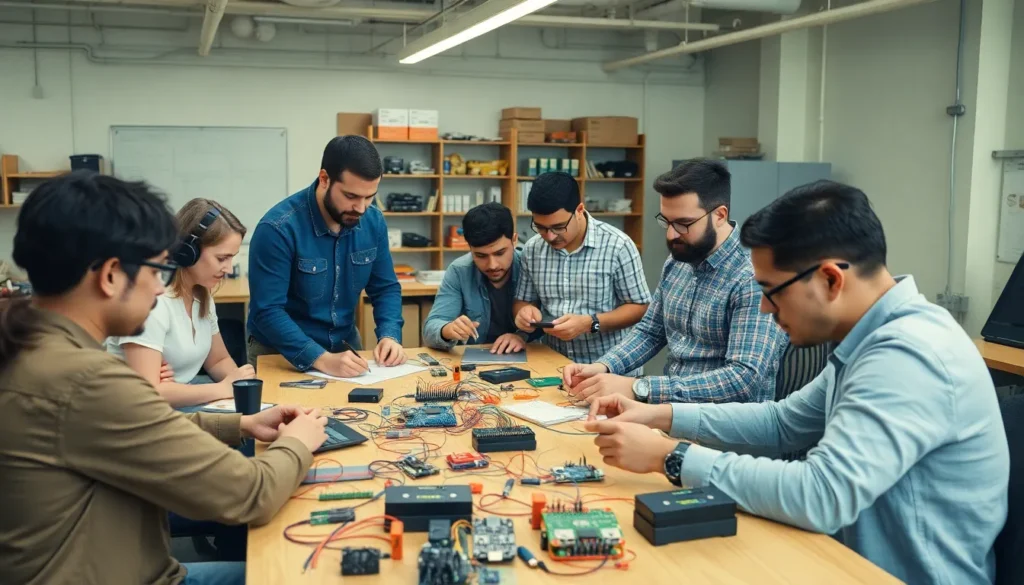
IoT prototyping platforms offer various essential features that streamline the development process for innovative projects.
Hardware Components
Multiple hardware components enable creators to build functional prototypes efficiently. Microcontrollers like Arduino and Raspberry Pi provide flexible and adaptable solutions for various projects. Sensors and actuators, including temperature sensors and relays, simplify gathering data and controlling devices. Additionally, platforms often include shields or expansion boards that enhance capabilities by adding communication modules or power regulation. Access to these diverse components ensures that users can tailor their projects to specific needs while significantly reducing time spent on hardware setup.
Software Tools
Integrated software tools support the development and design of IoT applications. Many platforms feature user-friendly interfaces that simplify coding and deployment. Visual programming environments like Blockly or Scratch allow users with limited coding knowledge to create complex functions using drag-and-drop mechanics. Libraries and SDKs often come bundled with platforms, providing pre-built functions that facilitate faster coding and reduce errors. Tutorials and documentation enhance the learning experience, enabling users to troubleshoot effectively and optimize the performance of their projects.
Connectivity Options
Various connectivity options play a crucial role in successful IoT implementations. Wi-Fi, Bluetooth, and Zigbee are popular choices that cater to different project requirements. Many platforms support multiple connectivity protocols, allowing users to select the best option based on range, power consumption, and application needs. Additionally, cloud integration capabilities enhance data storage and real-time analytics, promoting smoother user experiences. Effective connectivity empowers prototypers to test and deploy smarter solutions, linking devices seamlessly for enhanced functionality.
Popular IoT Prototyping Platforms
Numerous IoT prototyping platforms are available, each offering distinct features that cater to diverse project requirements. Below are some popular options.
Arduino
Arduino stands out as a versatile platform for creators at all skill levels. It provides a wide variety of microcontroller boards that enable easy integration with sensors, motors, and modules. Developers appreciate Arduino’s extensive libraries, which simplify coding and accelerate the prototyping process. With a user-friendly environment, one can quickly build projects like smart lighting or home automation systems. Active community support through forums and tutorials ensures users receive guidance and troubleshooting assistance when needed.
Raspberry Pi
Raspberry Pi offers a powerful single-board computer ideal for complex IoT projects. It’s equipped with multiple USB ports and GPIO pins that facilitate various connections to external devices. This platform excels in tasks requiring greater processing power, such as image recognition or data analysis. Users benefit from a comprehensive operating system that supports numerous programming languages, enhancing flexibility during development. Educational resources further enable users to overcome challenges and explore innovative applications within smart technology domains.
Particle
Particle specializes in IoT solutions with a robust cloud connectivity framework. It combines hardware with cloud services, allowing streamlined data management and remote device monitoring. Creators can select from multiple development kits tailored to specific applications, such as environmental monitoring or wearables. Particle’s integration with various development languages provides flexibility and scalability as projects evolve. The platform’s resources and active community make it easy for newcomers to access tools and support, fostering an innovative environment for IoT designers.
Benefits of Using IoT Prototyping Platforms
IoT prototyping platforms offer numerous benefits that streamline development processes and enhance innovation. They empower creators to bring their ideas to life quickly and efficiently.
Rapid Development
Rapid development is a significant advantage of using IoT prototyping platforms. These platforms provide pre-built components that developers can utilize without extensive coding knowledge. Rapid iteration contributes to faster testing and refinements, allowing changes to be made on-the-fly. Users can connect sensors and controllers seamlessly, cutting down on lead time for projects. Features like visual programming enable users to create applications quickly. Access to libraries and frameworks supports specific IoT applications, ensuring that prototyping becomes a straightforward process.
Cost Efficiency
Cost efficiency plays a crucial role in choosing an IoT prototyping platform. Many options offer free tiers, making them accessible for individual creators and startups. By minimizing upfront costs, these platforms reduce financial barriers to experimentation and innovation. Additionally, using pre-built components lowers material costs since creators don’t need to purchase separate parts for each project. Open-source resources also enable cost-effective solutions as users leverage existing code and community knowledge rather than starting from scratch. This combined approach leads to substantial savings throughout the development lifecycle.
Flexibility and Scalability
Flexibility and scalability are essential features of IoT prototyping platforms. Developers can easily adjust projects to meet evolving requirements or integrate new functionalities as needed. Most platforms support a variety of hardware and software components, enabling customization to address specific preferences. Users can select from numerous connectivity options, such as Wi-Fi, Bluetooth, or Zigbee, making it effortless to adapt to different applications. As projects grow, scalability ensures that solutions remain effective and efficient without requiring a complete overhaul. This adaptability fosters continuous innovation and wild experimentation in the IoT space.
Challenges in IoT Prototyping
Several challenges arise during IoT prototyping which can impact the development process. Understanding these obstacles is crucial for creators.
Technical Limitations
Technical limitations often hinder effective prototyping. Hardware constraints such as insufficient processing power can restrict project complexity. Sensors may have limited range or accuracy, affecting data quality. Software compatibility issues may arise, especially when integrating various libraries and tools. Documentation quality can vary, leading to confusion during implementation. Some platforms may not support desired functionalities, requiring workarounds. Creators must navigate these challenges to optimize their prototypes effectively.
Integration Issues
Integration issues frequently complicate IoT prototyping. Connecting multiple devices can lead to communication challenges, especially across different protocols. Ensuring seamless data flow demands careful planning and the right choices of connectivity options. Interoperability between devices often presents difficulties, impacting overall functionality. Additionally, maintaining synchronization among sensors and devices can result in lag, diminishing user experience. Security considerations also arise during integration, with vulnerabilities needing to be addressed effectively. Addressing these integration challenges contributes to a successful IoT prototype.
Conclusion
The rise of IoT prototyping platforms marks a pivotal moment in the development of innovative solutions. These platforms not only simplify the prototyping process but also democratize access to technology for creators of all skill levels. With user-friendly interfaces and robust community support, individuals can bring their ideas to life more efficiently than ever.
As the IoT landscape continues to evolve, the importance of these platforms will only grow. They empower developers to experiment and iterate rapidly, paving the way for smarter and more connected solutions. Embracing these tools can unlock new possibilities, making the journey from concept to reality both exciting and achievable.


