
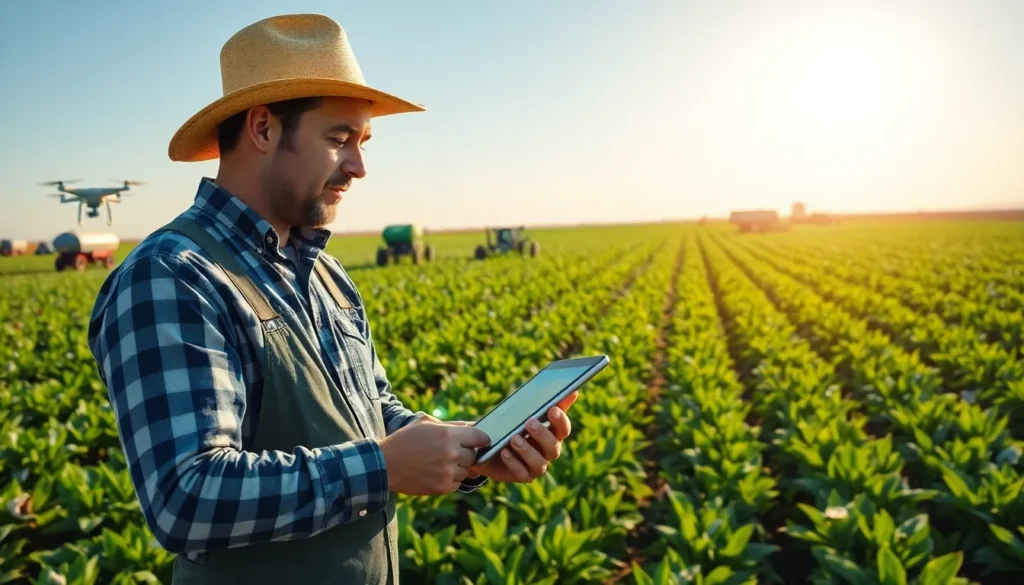
In a world where climate change looms like a bad hair day, sustainable agriculture technology emerges as the superhero we didn’t know we needed. It’s not just about growing food; it’s about growing it smartly and responsibly. Imagine a farm where robots do the heavy lifting, drones monitor crops like hawks, and data analytics help farmers make decisions faster than you can say “organic kale.”
This isn’t some sci-fi fantasy; it’s happening right now. As the global population skyrockets, the demand for food is increasing faster than a teenager’s appetite. Sustainable agriculture tech is here to save the day, ensuring we can feed everyone without turning our planet into a barren wasteland. Let’s dive into the innovative solutions transforming farming from a back-breaking chore into a high-tech adventure.
Overview of Sustainable Agriculture Technology
Sustainable agriculture technology encompasses various innovations aimed at increasing food production while minimizing environmental impact. Recent advancements include the use of robots for planting and harvesting crops more efficiently. Drones play a critical role in monitoring crop health and assessing land conditions through aerial imagery.
Data analytics aids farmers in making informed decisions by analyzing climatic and soil conditions. Precision agriculture employs GPS technology to apply inputs, such as fertilizers and pesticides, only where needed. This targeted approach reduces waste and environmental damage.
Vertical farming represents another breakthrough, allowing cultivation in urban settings where space is limited. Hydroponics and aeroponics optimize water use and eliminate the need for soil, leading to faster plant growth. Furthermore, the Internet of Things (IoT) connects sensors and devices to streamline operations.
Innovative breeding techniques, including CRISPR, enable the development of crop varieties that resist diseases and adapt to changing climates. In addition, regenerative agriculture practices enhance soil health and biodiversity through cover cropping and reduced tillage.
Sustainable agriculture technology not only addresses food security challenges but also promotes long-term ecological balance. Implementing these technologies results in reduced greenhouse gas emissions and preserves vital natural resources. As this field evolves, collaboration among farmers, researchers, and tech developers will continue driving progress toward more sustainable farming practices.
Benefits of Sustainable Agriculture Technology
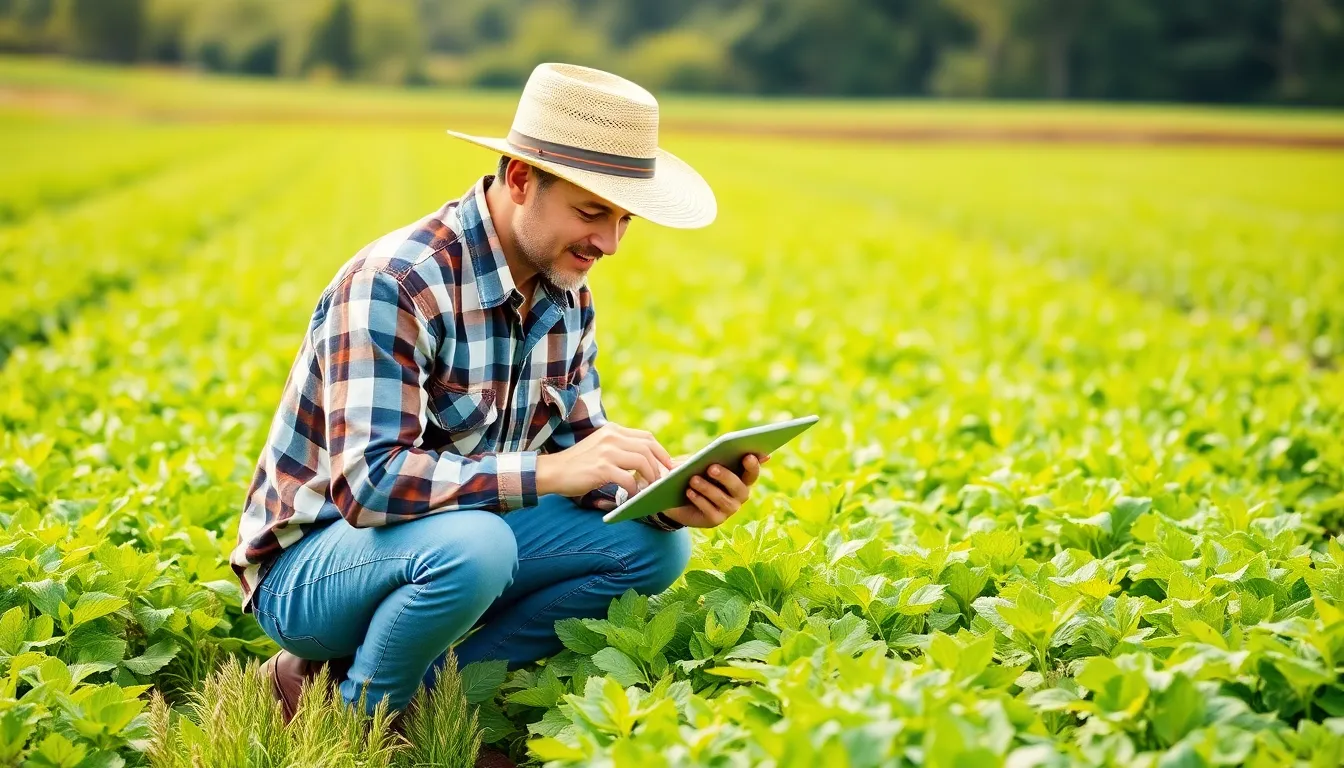
Sustainable agriculture technology offers numerous benefits, enhancing both the environment and the economy. Innovations in this field are reshaping traditional farming practices, leading to significant improvements.
Environmental Impact
Sustainable agriculture technology significantly reduces environmental degradation. It lowers greenhouse gas emissions through precision farming, which applies resources more efficiently. Practices such as vertical farming not only optimize space but also decrease land use, preserving biodiversity. Water usage drops with techniques like hydroponics, making irrigation methods more efficient. Soil health improves with regenerative practices, enhancing its ability to sequester carbon. With these advancements, farmers contribute to a healthier ecosystem while maintaining productivity.
Economic Advantages
Economic benefits of sustainable agriculture technology are substantial. Increased efficiency in production leads to higher crop yields and profits for farmers. Implementing technology reduces input costs, such as fertilizers and pesticides, minimizing financial expenditure. Access to data analytics allows farmers to make informed decisions, optimizing resource allocation and maximizing profitability. As demand for sustainably produced food rises, farmers adopting these practices can benefit from premium prices. Overall, sustainable agriculture technology creates a more resilient economic framework within agriculture.
Key Technologies in Sustainable Agriculture
Sustainable agriculture technology employs various innovations to enhance efficiency and reduce environmental impacts. These technologies significantly contribute to smarter farming practices.
Precision Farming
Precision farming utilizes GPS and IoT devices for site-specific crop management. Technology enables farmers to optimize resource use, ensuring inputs like water and fertilizer apply only where needed. Sensors collect data on soil health and moisture levels, allowing for informed decisions. This targeted approach results in reduced waste and increased crop yields. With its ability to adjust to varying field conditions, precision farming maximizes productivity while minimizing environmental damage.
Hydroponics and Aquaponics
Hydroponics and aquaponics represent innovative solutions for urban farming. In hydroponics, plants grow in nutrient-rich water without soil, providing faster growth rates. Aquaponics combines fish farming with plant cultivation, creating a symbiotic environment. These systems drastically reduce water usage compared to traditional farming, promoting sustainability. By integrating these methods, urban areas gain fresh produce without extensive land use, contributing to local food security.
Drones and AI in Agriculture
Drones and artificial intelligence revolutionize agricultural practices through aerial monitoring and data analysis. Drones capture high-resolution images to assess crop health and detect issues early. AI algorithms analyze this data, providing farmers with actionable insights on pest control and nutrient management. This technology allows for precision interventions, leading to increased yields and reduced chemical usage. Efficient resource management enhances crop resilience while minimizing negative impacts on the ecosystem.
Challenges Facing Sustainable Agriculture Technology
Sustainable agriculture technology faces several significant challenges impeding its widespread adoption. Understanding these hurdles is crucial for effective solutions to be developed.
Adoption Barriers
Adoption barriers significantly hinder the integration of sustainable agriculture technologies. Many farmers express concerns over the complexities associated with new technologies. Access to adequate training and resources remains limited for numerous producers. Financial constraints become another hurdle, as initial investments in technology can be steep. Additionally, a lack of awareness about the benefits stifles motivation among traditional farmers. Some regions also present infrastructure deficits that challenge technology deployment, especially in rural areas. Education and outreach play vital roles in overcoming these barriers.
Economic Viability
Economic viability poses another challenge for sustainable agriculture technology. Cost-benefit analyses often reveal uncertainty about long-term profitability. Farmers worry that initial expenses outweigh potential gains from improved efficiency. Market fluctuations further complicate the situation, impacting pricing strategies. Moreover, the competitive landscape creates pressure to produce at lower costs, sometimes discouraging sustainable practices. Quantifying the return on investment remains essential to gain support from stakeholders. Aligning these technologies with existing economic frameworks fosters a more favorable environment for adoption.
Future Trends in Sustainable Agriculture Technology
AgTech advancements focus on expanding precision farming capabilities. Machine learning algorithms analyze vast datasets, predicting crop yields more accurately. Integration of Internet of Things devices enhances real-time monitoring of environmental factors. These innovations streamline resource use while maximizing productivity.
Robotics increasingly play a role in autonomous farming tasks. Automation speeds up processes such as planting, weeding, and harvesting. In 2022, the global agricultural robotics market reached $5.1 billion, reflecting this growing trend. Drones offer aerial surveillance to assess crops, further improving efficiency.
Vertical farming technologies will continue to evolve for urban settings. Optimized indoor conditions allow for year-round crop production. In addition, hydroponic and aquaponic systems recirculate water more efficiently than traditional methods. Organizations are investigating AI-driven variants to enhance growth patterns and minimize space usage.
Biotechnology innovations promise to revolutionize how crops are developed. Genetic editing tools enable the creation of disease-resistant plants, boosting resilience against climate stressors. By 2025, over 100 million acres may utilize these advanced breeding techniques.
Investment in sustainable practices is likely to increase among agricultural stakeholders. Market demands for sustainably produced food drive this growth. According to a recent report, the global market for organic food is projected to reach $620 billion by 2025. Collaborative efforts among farmers, tech developers, and researchers will cultivate an environment favorable to incorporating these technologies.
Education and outreach will address barriers to technology adoption. Training programs designed for traditional farmers can demystify complex systems. Ensuring accessibility to resources remains crucial for achieving widespread implementation. As innovations unfold, the agriculture sector will continue moving towards sustainability while addressing food security challenges globally.
Sustainable agriculture technology stands at the forefront of addressing pressing global challenges. By harnessing innovative tools and practices farmers can enhance productivity while safeguarding the environment. The integration of robotics drones and data analytics is transforming traditional farming into a more efficient and responsible venture.
As the agricultural landscape evolves the focus on sustainability will only intensify. Future advancements promise to further optimize resource use and improve crop resilience. Education and support for farmers will be crucial in overcoming barriers to adoption ensuring that these technologies benefit both producers and consumers.
The commitment to sustainable agriculture technology not only secures food supply but also fosters a healthier planet for future generations. Embracing these innovations is essential for creating a sustainable agricultural framework that meets the needs of a growing population while preserving natural resources.


